

CCR has tenaciously challenged discriminatory policing for decades, recognizing that discrimination and police violence do not arise as isolated incidents but are deeply embedded within our criminal justice system. We have challenged both local law enforcement (most notably the NYPD) and federal agencies (such as the FBI, DHS, and ICE) on behalf of communities of color, Muslims, LGBTQI people, and immigrant communities. We have challenged these practices in numerous iterations, from racially discriminatory stop-and-frisk practices to the post-9/11 surveillance and harassment of Muslims; from legislation that unequally punishes LGBTQI people to the unlawful and terrifying law enforcement raids of immigrant homes. Our litigation and advocacy work supports broader organizing efforts by our clients and partners, and in turn has often become a focal point around which affected communities rally. CCR has been a proud supporter of and participant in these efforts. Most notable in this regard is CCR’s deep collaboration with Communities United for Police Reform, which successfully mobilized New York City to #ChangetheNYPD.
Donate Button
DonateDiscriminatory Policing
-
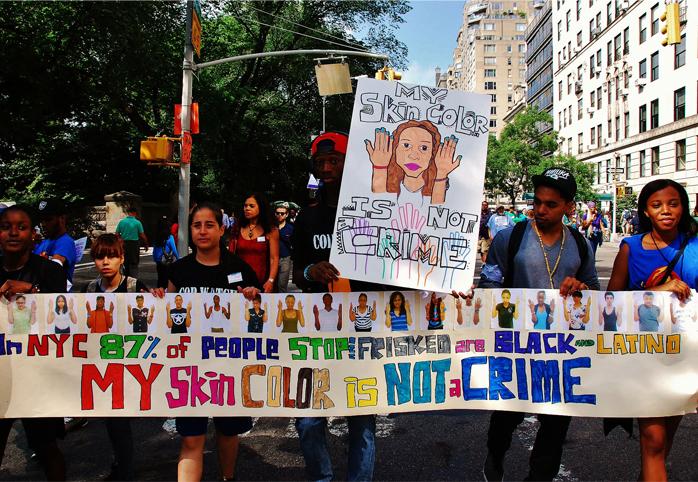 The effort to end the NYPD’s racially discriminatory policing practices is much more than a courtroom fight. It is a broad movement of New Yorkers working to create a city in which everyone’s rights are respected. CREDIT: Tim Schreier
 -
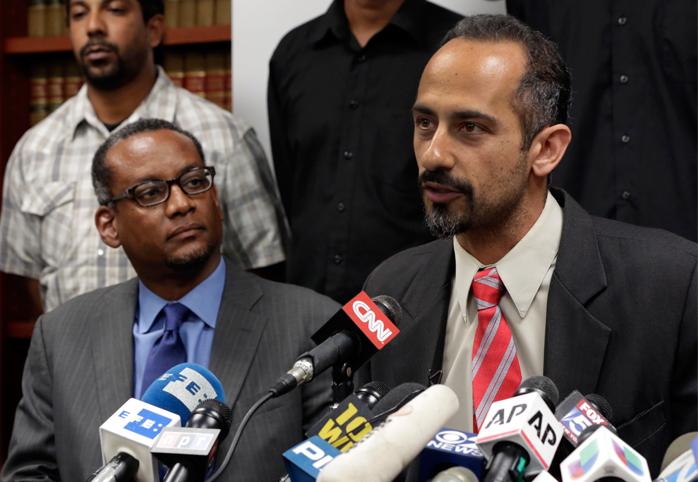 In our landmark, class-action lawsuit, CCR challenged the NYPD’s stop-and-frisk practices. The court found racial discrimination and 4th Amendment violations, ordering a reform process that includes input from affected communities.
 -
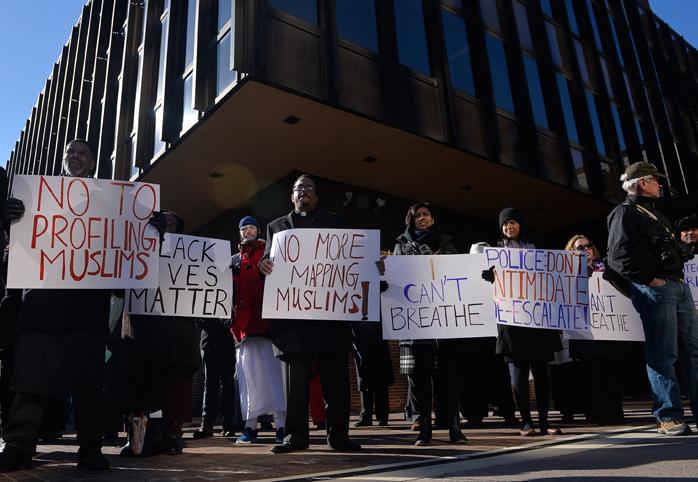 CCR has sued the NYPD over its widespread, unlawful surveillance of Muslim communities in New Jersey.
Cases
News
See more News
April 12, 2024
Stop-and-Frisk Attorneys Respond to Monitor’s Flawed and Misleading Report
Data does not support claim that racial disparities in NYPD stops no longer exist, lawyers say New York, April 12, 2024 – In response to the report just filed by the court-appointed monitor in the landmark case, Floyd v. City of New York , stop-and-frisk attorneys issued the following comments: “...
April 5, 2024
Court orders investigation into abusive and wrongful deportations of Cameroonians
...Documents obtained by the plaintiffs in 2023 through a FOIA request reveal that U.S. government officials expressed racist attitudes toward Black migrants during the 2020 and 2021 flights. According to the documents, immigration officials treated their deportation as a sport and dismissed...PRISM
April 5, 2024
LGBTQ Advocates to SCOTUS: Don’t Let Cities Criminalize Houseless People
Now, as the Supreme Court considers Grants Pass v. Johnson, a landmark case poised to determine the rights of people who have no choice but to sleep outside during a housing crisis unprecedented in modern times, a coalition of 46 rights groups are warning that queer people, and youth in particular...Truthout
April 3, 2024
46 LGBTQIA+ Rights Groups Urge Supreme Court to Overturn Oregon Ordinances That Criminalize Homelessness
Unhoused at high rates, LGBTQIA+ people face dire threat from such laws, which are cruel and unusual punishment, amicus brief says April 3, 2024, Washington, D.C. – The Supreme Court should rule that ordinances criminalizing homelessness violate the Eighth Amendment’s prohibition on cruel and...
March 7, 2024
Center for Constitutional Rights Condemns Governor Hochul's Unconstitutional “Subway Safety” Plan
March 7, 2024, New York – In response to the governor of New York’s announcement of a five-point “subway safety” plan, the Center for Constitutional Rights issued the following statement: The Center for Constitutional Rights unequivocally condemns Governor Kathy Hochul's recently announced five-...
February 25, 2024
How the ADL's Anti-Palestinian Advocacy Helped Shape U.S. Terror Laws
...“In the history of U.S. terrorism law, Palestine is the elephant in the room,” said Darryl Li, an anthropologist and legal scholar at the University of Chicago and author of the report. The legal analysis, co-published by the Center for Constitutional Rights and Palestine Legal, a group that...The Intercept
Resources
See more Resources
March 6, 2024
Sweet Tea with Transparency: An Open Records Resource for Movements in the South
Resource
August 21, 2023
Supporting the Movement to Stop Cop City
Resource
September 9, 2013
U.S. Government and Compliance with the ICCPR
Resource
May 18, 2022
U.S. Government and Compliance with CERD Treaty
Resource
April 21, 2023
Engagement with UN Expert Mechanism to Advance Racial Justice and Equality in Law Enforcement (UN EMLER)
Resource
March 17, 2023
Marking the 10th Anniversary of Landmark "Stop-and-Frisk" Trial
ResourceOpinion Pieces
See more Opinion PiecesGovernor Hochul’s Subway Plan is Subterranean Stop and Frisk
March 21, 2024
A few months ago, I gathered with colleagues and allies to mark the 10th anniversary of the landmark stop-and-frisk ruling , which held New York City liable for a pattern of unconstitutional stops and racial profiling by the NYPD. My organization had brought the class action lawsuit that challenged... Stop and Frisk 10 years later: how many more stops?
August 21, 2023
...A decade later, while we commemorate this legal and organizing breakthrough, we’re also taking stock of its impact, and the stark truth is stops are actually on the rise again. The latest Monitor’s report …found that nearly all– 97% –of those stopped by the NYPD’s Neighborhood Safety Teams (... Opinion: Rejecting the Notion of a ‘Feminist’ Jail for Harlem
August 5, 2022
... As officials across the country move to criminalize people for accessing abortion, reproductive and gender-affirming care, Gov. Kathy Hochul and Mayor Eric Adams have attempted to position themselves as strong gender and reproductive justice advocates , promising commitments to bodily autonomy... News Videos
See more VideosDecember 27, 2017
Meet the Federal Judge Trump Attacked for Ruling NYPD’s Stop & Frisk Policy was Unconstitutional

Democracy Now!

June 27, 2017
Court: Bush Administration Officials Can't Be Held Liable for Post-9/11 Mass Roundup of Muslims
Democracy Now!